Product Design + Development
Portix
Tools Used
Live Project
01
Overview
Portix is a two-sided event ticket marketplace I designed and built on Hyperliquid. Fans buy and resell tickets, and hosts issue, manage, and scan them at the door. I was the sole founder, designer, and developer.
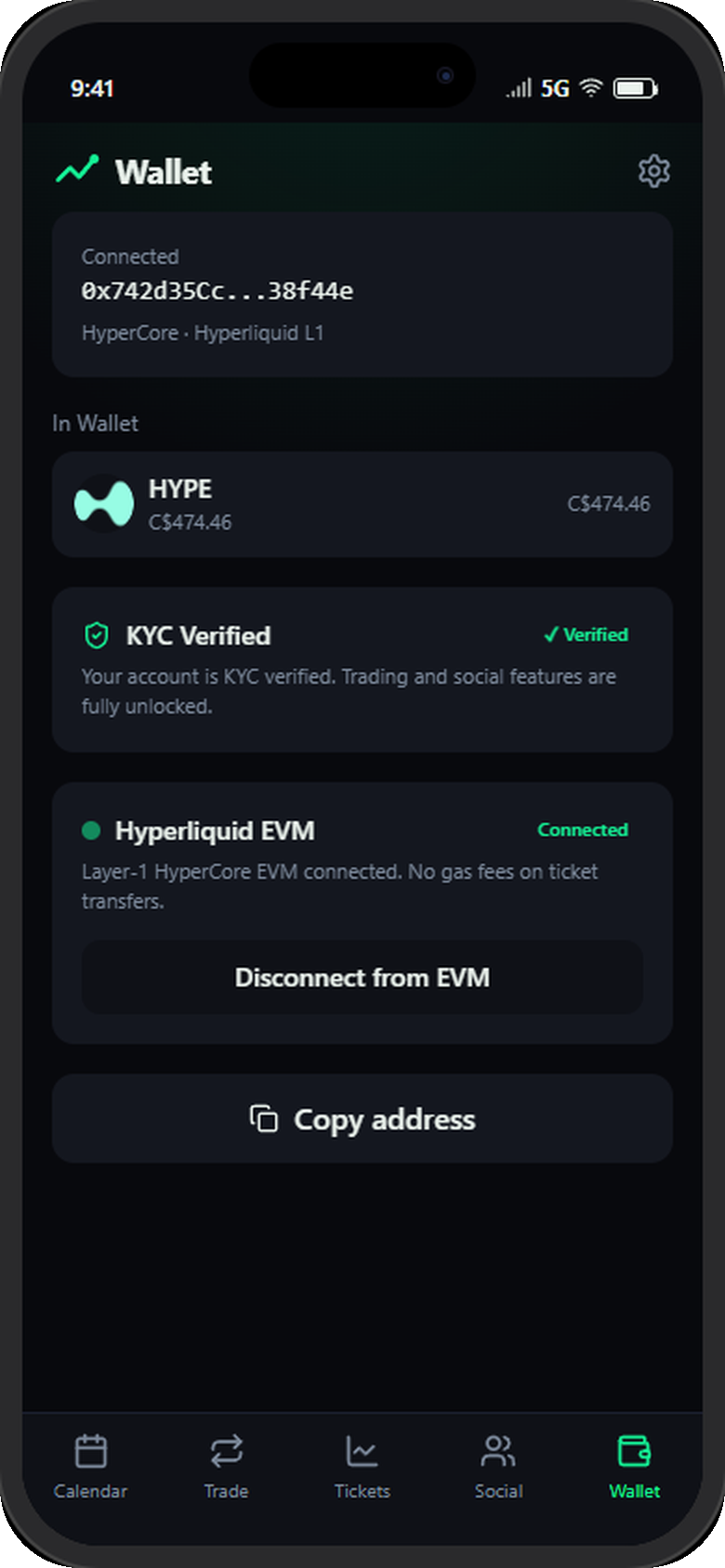
The goal was to fix what I saw as the core rot in ticketing: buyers never really own what they pay for, hosts lose control after the sale, and scalper bots win. I built the ticket as a real, resellable on-chain asset with near-zero gas, and I gated checkout behind KYC to keep tickets with real fans.
02
The Problem
Event ticketing is plagued by scalpers, opaque fees, and tickets that buyers never truly own. Fans overpay on resale, hosts lose control after the sale, and there is no clear record of who actually holds a ticket.
The gap I wanted to close: make a ticket a real asset the buyer owns and can resell, while keeping hosts in control of issuance and redemption and shutting scalper bots out by design.
03
The Insight & My Approach
The leverage point is settlement. If a ticket lives on-chain as a transferable token, ownership is real and resale is just a transfer, no opaque intermediary. Hyperliquid HIP-1 gave me that with near-zero gas, so the on-chain version could finally feel as smooth as a normal app.
Because I was solo, I scoped to the two sides that matter most: the fan buying and reselling, and the host issuing and scanning. I cut everything that did not serve that loop (secondary analytics, multi-event bundles) for v1.
04
Design Decisions & Tradeoffs
Phone-first, not web. Ticketing happens at the door and on the move, so the buyer and scanner flows are mobile-native; the host dashboard is the one wider surface. I accepted a smaller canvas to match where the product is actually used.
KYC-gated checkout over pure anonymity. It costs conversion (a verification step before buying) but it is the mechanism that keeps tickets with real fans and out of bot farms. I judged the anti-scalping value worth the friction, and it is the tradeoff I am most ready to defend.
On-chain HIP-1 over a traditional database. It means buyers genuinely own the ticket and resale is a transfer, but it also means designing around wallet and chain realities rather than a simple row in a table.
05
The Marketplace
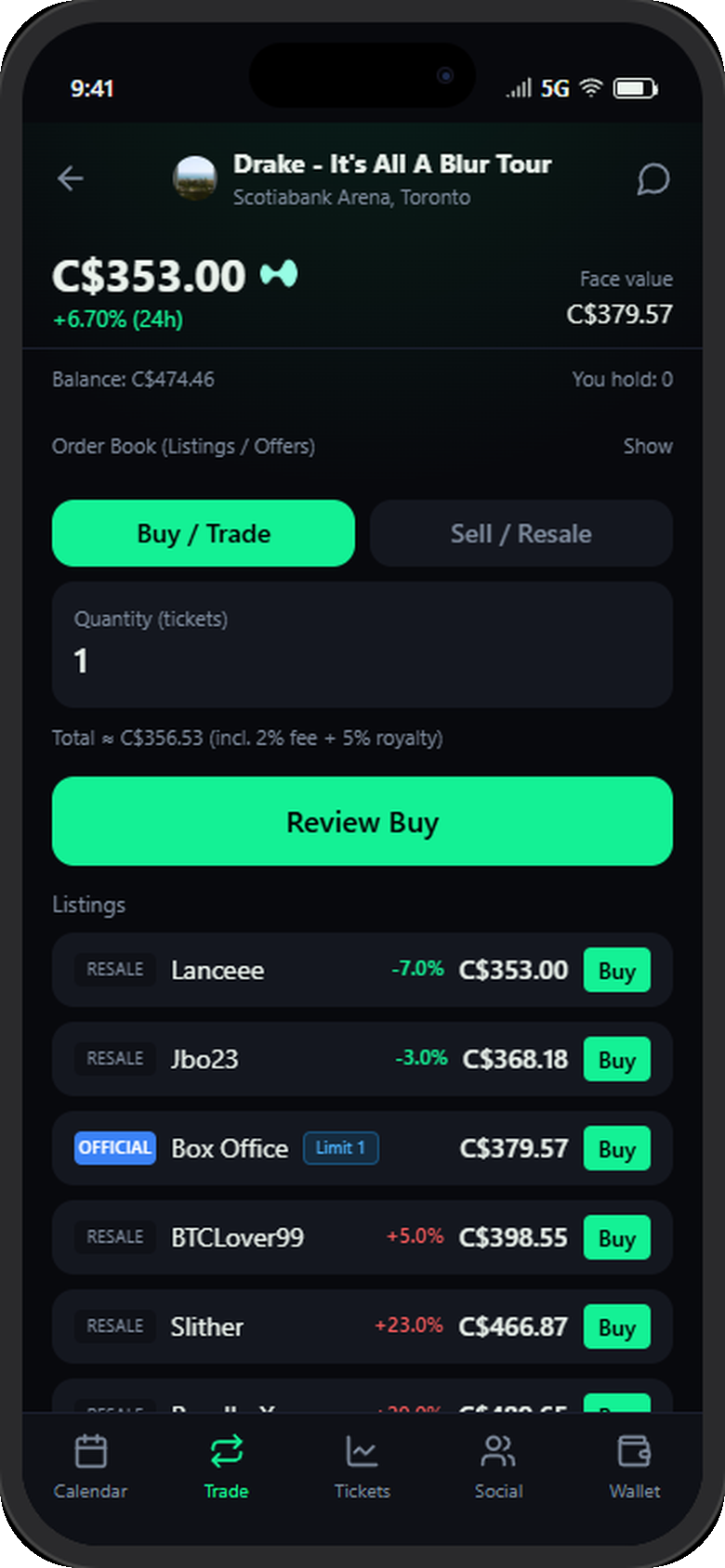
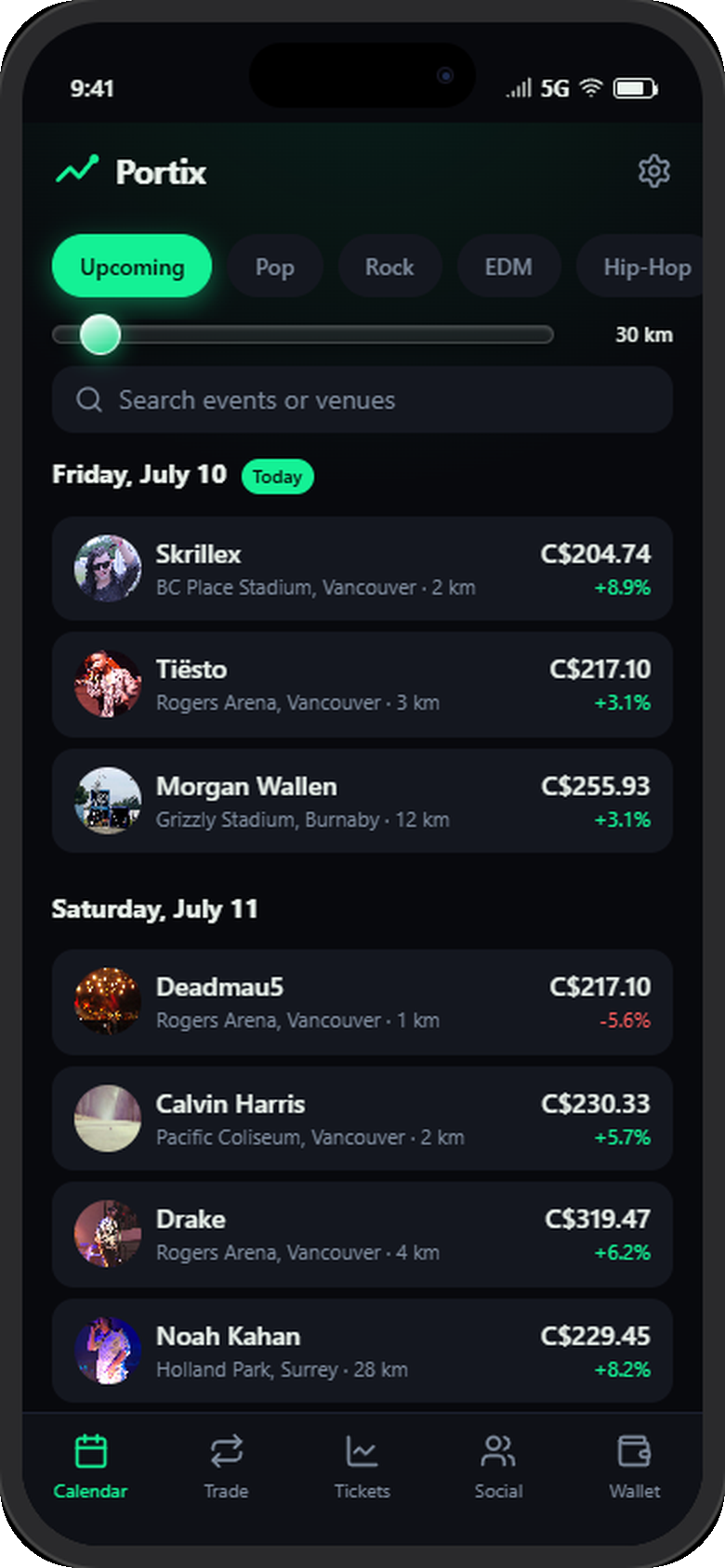
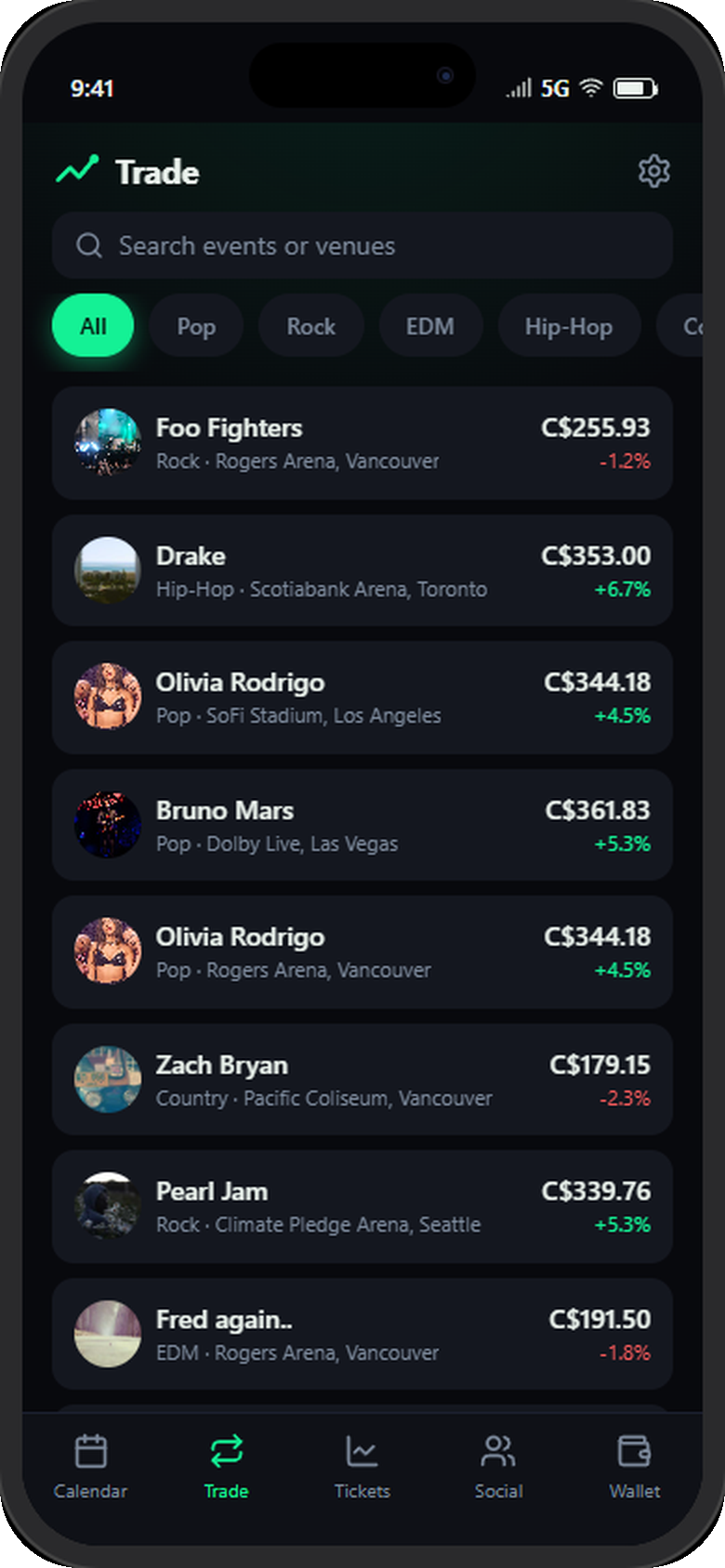
The customer side is a clean, dark marketplace to browse events, view ticket detail, and buy or list tickets for resale. Listings show real availability and price, and checkout is gated by KYC so only verified fans can purchase.
Because tickets settle on Hyperliquid HIP-1, ownership is on-chain and gas is effectively zero, so reselling is as simple as listing and transferring.
06
Tickets You Actually Own
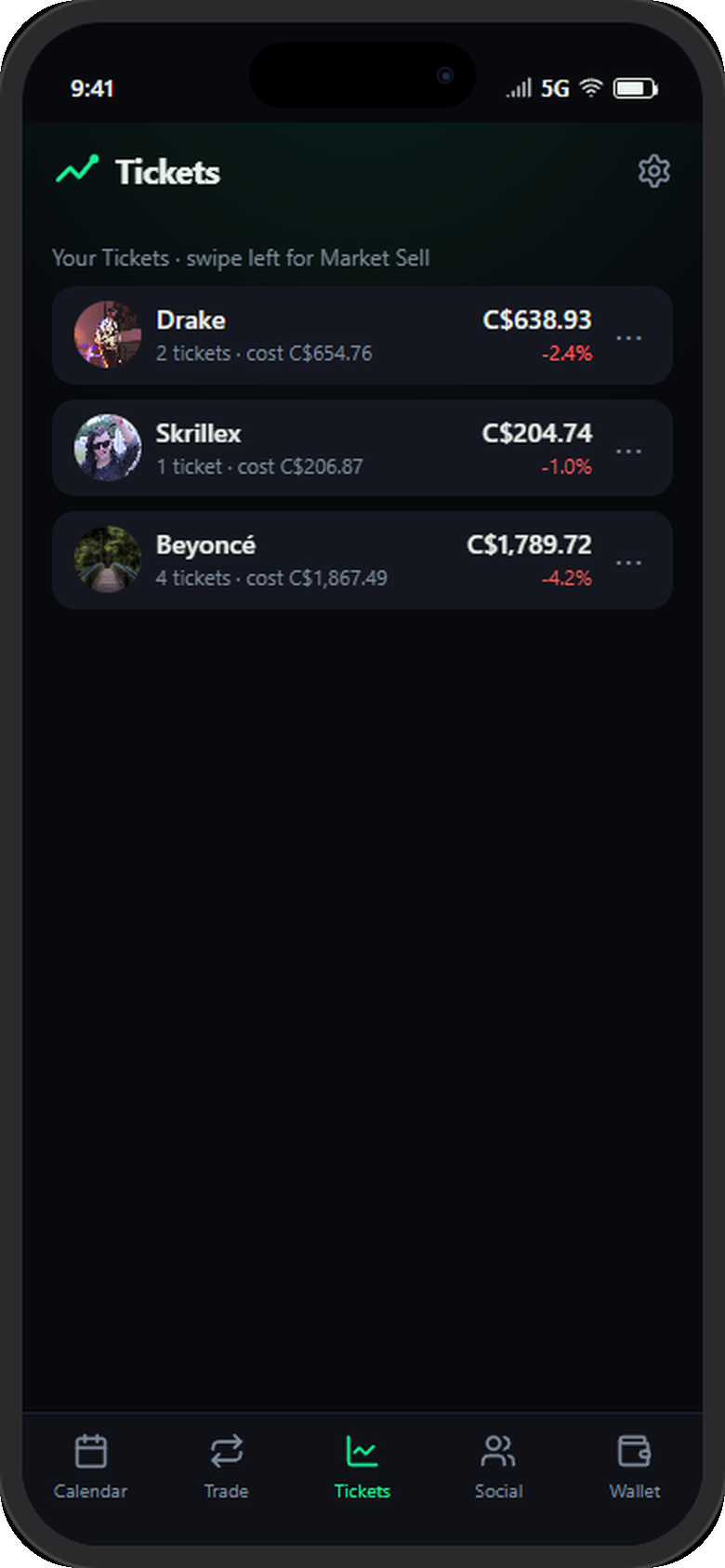
I designed the Tickets tab to read like a holdings page, not a purchase history. Every ticket sits with its original cost and live resale value, so the buyer sees a portfolio, not a receipt. The green and red changes tell you whether your tickets are up or down, just like any other asset.
This is the mental model I wanted: you hold this, you can sell it at market price, and the app surfaces the information you need to decide.
07
A Verified Social Layer
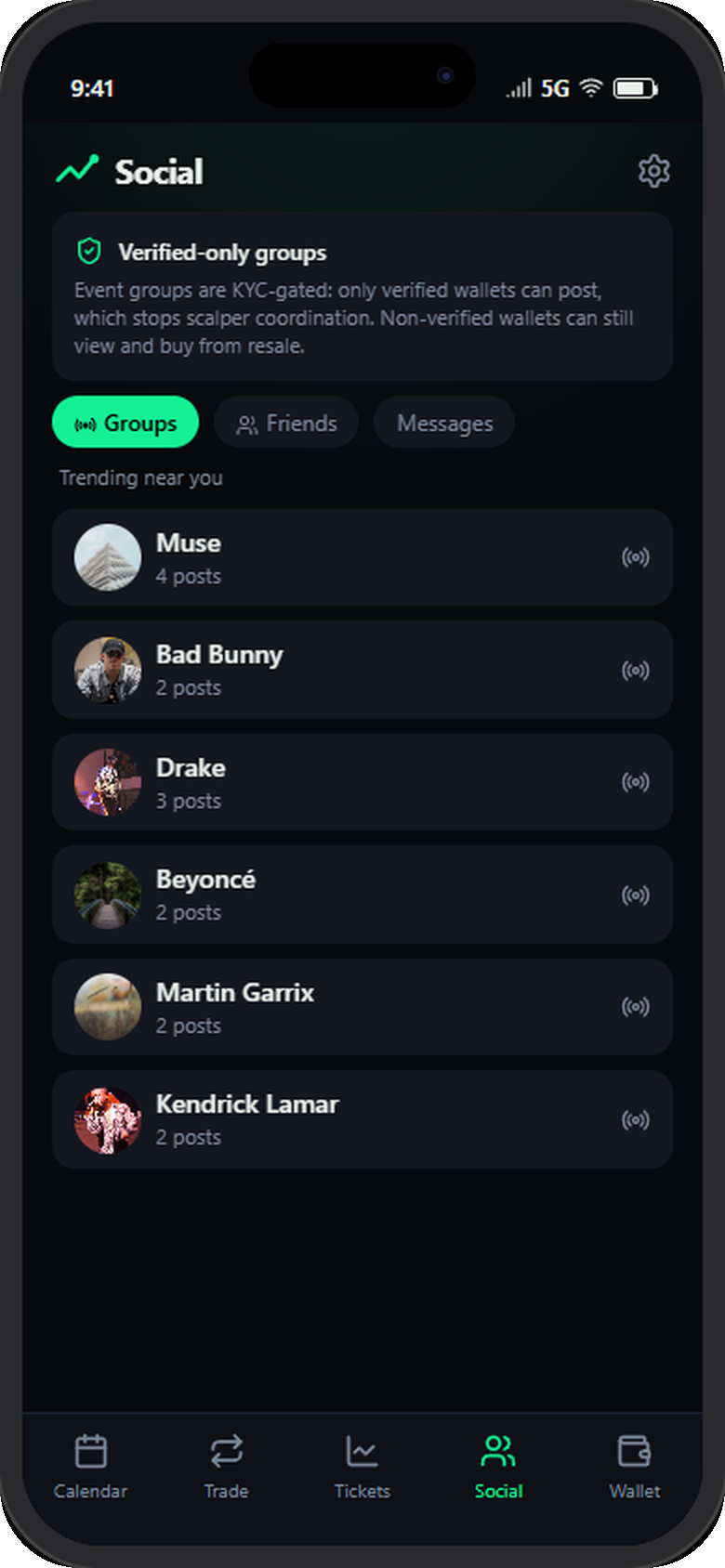
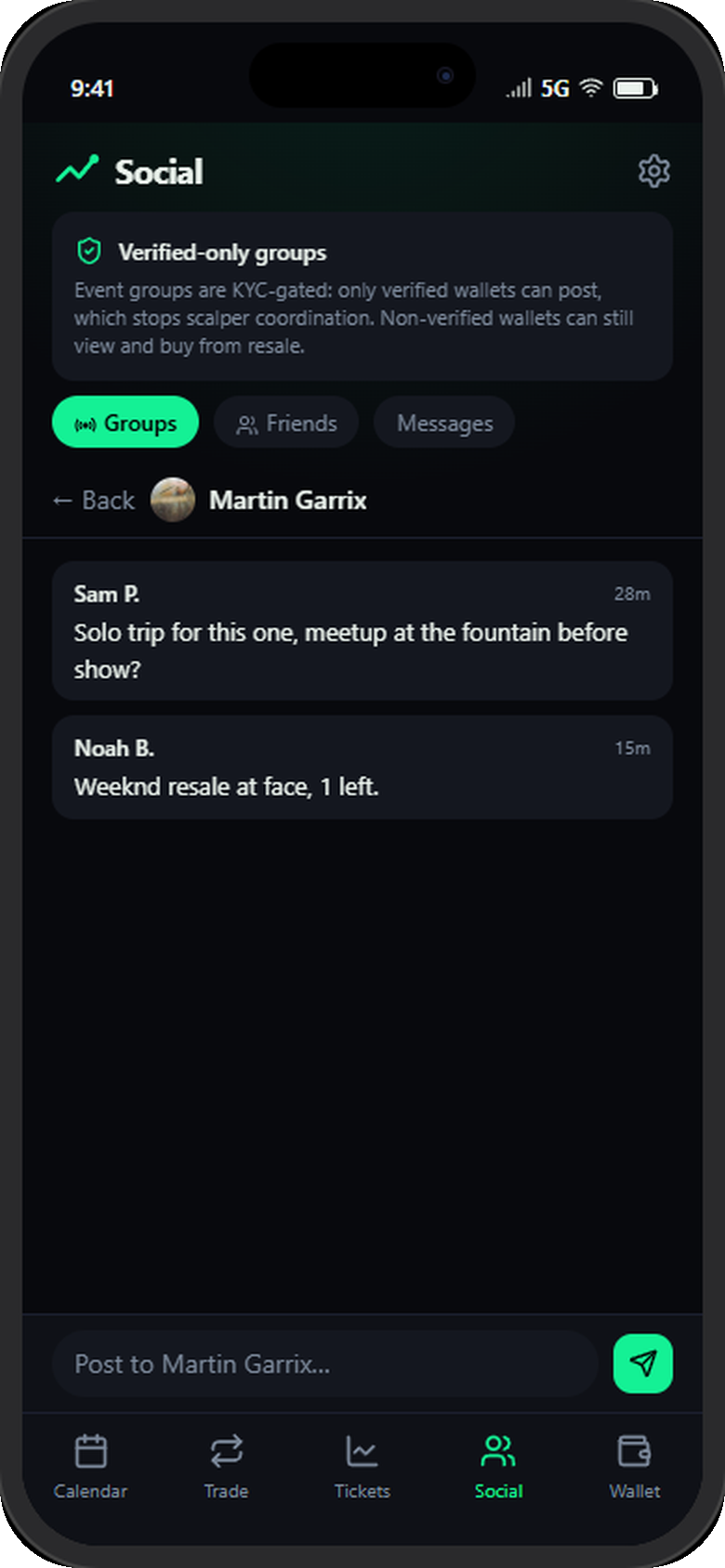
Scalper bots don't just buy tickets, they flood resale with fake accounts. I added verified-only groups and chat so real fans can coordinate meetups and transfers in a space where every participant has passed KYC. The trending list shows which artists have active communities, and the group chat lets fans organize direct within the verified circle.
08
Box Office (Host Portal)
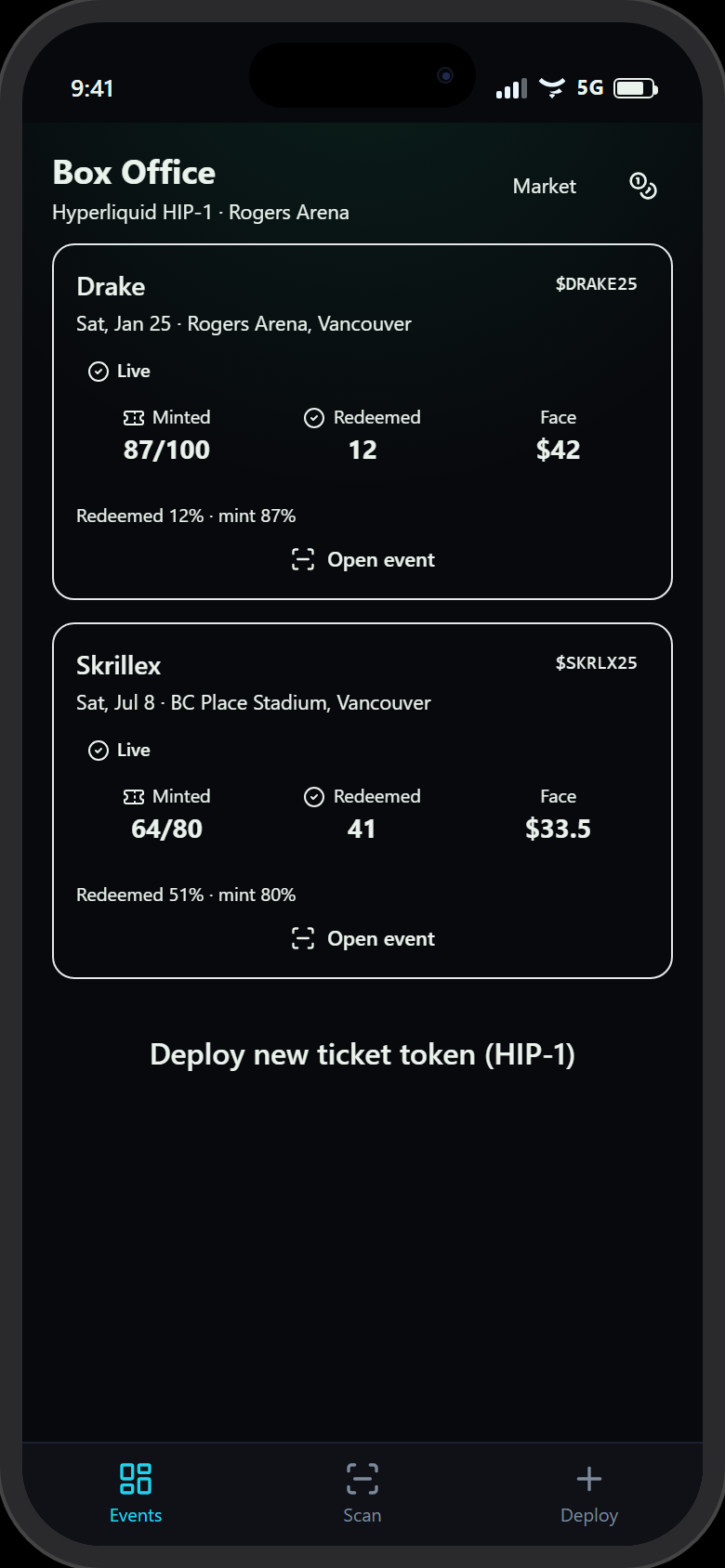
Hosts get a Box Office dashboard to deploy a ticket token (HIP-1) for each event, set supply and face value, and watch mint and redeem progress live. Each event card shows minted vs. total supply and how many tickets have been scanned at the door.
A built-in scanner lets staff redeem tickets on entry, updating attendance in real time so hosts always know how many fans are in the building. This is the moment the on-chain record becomes useful in the physical world.
09
Why It Stands Out
Portix treats tickets as owned, resellable assets instead of rental keys. Buyers get a transferable record of their purchase, hosts retain issuance and redemption control, and the Hyperliquid settlement layer removes the gas and friction that make most on-chain ticketing unusable for real events. The verified social layer extends that trust into the community: every chat participant is a real person, not a bot.
10
What I Learned & What's Next
The hardest part was making an on-chain flow feel normal. Wallets and chain states add friction a traditional app hides, so I would invest more in clear wallet-error states and a smoother first run, so a non-crypto user is never stuck.
The product is built and demonstrable, and the clear next step is a small pilot event to validate the door-scan flow under real conditions. That is how I would turn design intent into measured conversion and scan-through numbers.
Impact
Shipped a complete two-sided product solo: a consumer marketplace plus a host Box Office (event deploy, live mint/redeem metrics, QR scan-to-redeem).
Reframed a ticket as an owned, resellable on-chain asset (HIP-1), removing gas and custody friction that make most on-chain ticketing unusable for real events.
Designed a KYC-gated, anti-scalping purchase flow and can explain the tradeoff versus pure anonymity.
Key Features
Two-sided marketplace
Customers buy and resell; hosts issue and manage, all in one app.
On-chain tickets (HIP-1)
Tickets mint and settle on Hyperliquid with near-zero gas; buyers truly own them.
KYC-gated checkout
Anti-scalping purchase flow keeps tickets with real fans; a deliberate tradeoff.
Box Office dashboard
Live mint/redeem metrics per event for hosts.
Scan-to-redeem
QR scanning at the door with real-time attendance.
Resale built in
List and transfer tickets without leaving the app.